The Context:
Sales people often see their paychecks fluctuate by significant amounts every month. When sellers can't predict their pay, or don't understand the policies behind it, their compensation can seem arbitrary, leading to frustration and lower morale.
Note: I worked on this project with two other designers, a design systems specialist and a researcher. This is a modified version of a larger case study that was cowritten with some of these collaborators. Furthermore, I want to respect Cisco's NDA, so some key details and specific screens will have to be omitted. I am very happy to answer any questions you may have about these; so please don't hesitate to ask.
The Brief / Business Requirements:
Over time, as organizations add subsequent layers of functionality to products, the user experience can become disjointed and confusing. When this happens, it’s worth taking a step back to define a vision for an experience, structured around the user’s key needs and workflow.
We had extensive discussion with business and sales stakeholders in addition to some specific user groups. Some important inputs helped inform our problem framing:
Users often had to move across multiple tools to get a holistic view as to what was happening with their compensation. By reducing the number of tools required and simplifying the understanding of compensation, sellers might better understand sales behavior affects their income.
It also became clear that if salespeople better understood the relationship between their sales efforts and their incentive compensation, they would be more motivated to hit various goals.
“I don't want to waste my time. But at the same point, I want to understand why I get paid what I do, and I struggle to connect the dots.”
— Business Development Specialist
Laying the Foundations for a User-Centered Experience:
To address these seller needs and business goals, we worked with the operations, Sales Support, and Product Management to bring users to the center of the conversation and rethink the ways that sellers understand and manage their incentive compensation. We set out to establish a roadmap for the future experience, validate it with users, and provide enough design specifics for engineering to estimate the requirements for building the solution. Together, we reimagined a new vision for Cisco's compensation solution and streamlined the path to implementation.
To address these seller needs and business goals, we worked with the operations, Sales Support, and Product Management to bring users to the center of the conversation and rethink the ways that sellers understand and manage their incentive compensation. We set out to establish a roadmap for the future experience, validate it with users, and provide enough design specifics for engineering to estimate the requirements for building the solution. Together, we reimagined a new vision for Cisco's compensation solution and streamlined the path to implementation.
Understanding Users:
We began by talking with our users to understand what was and wasn’t working for them. Through stakeholder workshops and user interviews, we identified personas and their key jobs-to-be-done across various compensation tools. The jobs-to-be-done framework helped us focus on the tasks users want to accomplish rather than the features they currently use.
Through interviews and research, we identified the key jobs-to-be-done as a series of questions the seller needs to answer:
• How much will I be paid and why?
• How am I doing against my goals?
• What other incentives are available to me?
• Did I receive compensation credit?
• How much could I earn if my deals go through?
• Why was money taken from my payment?
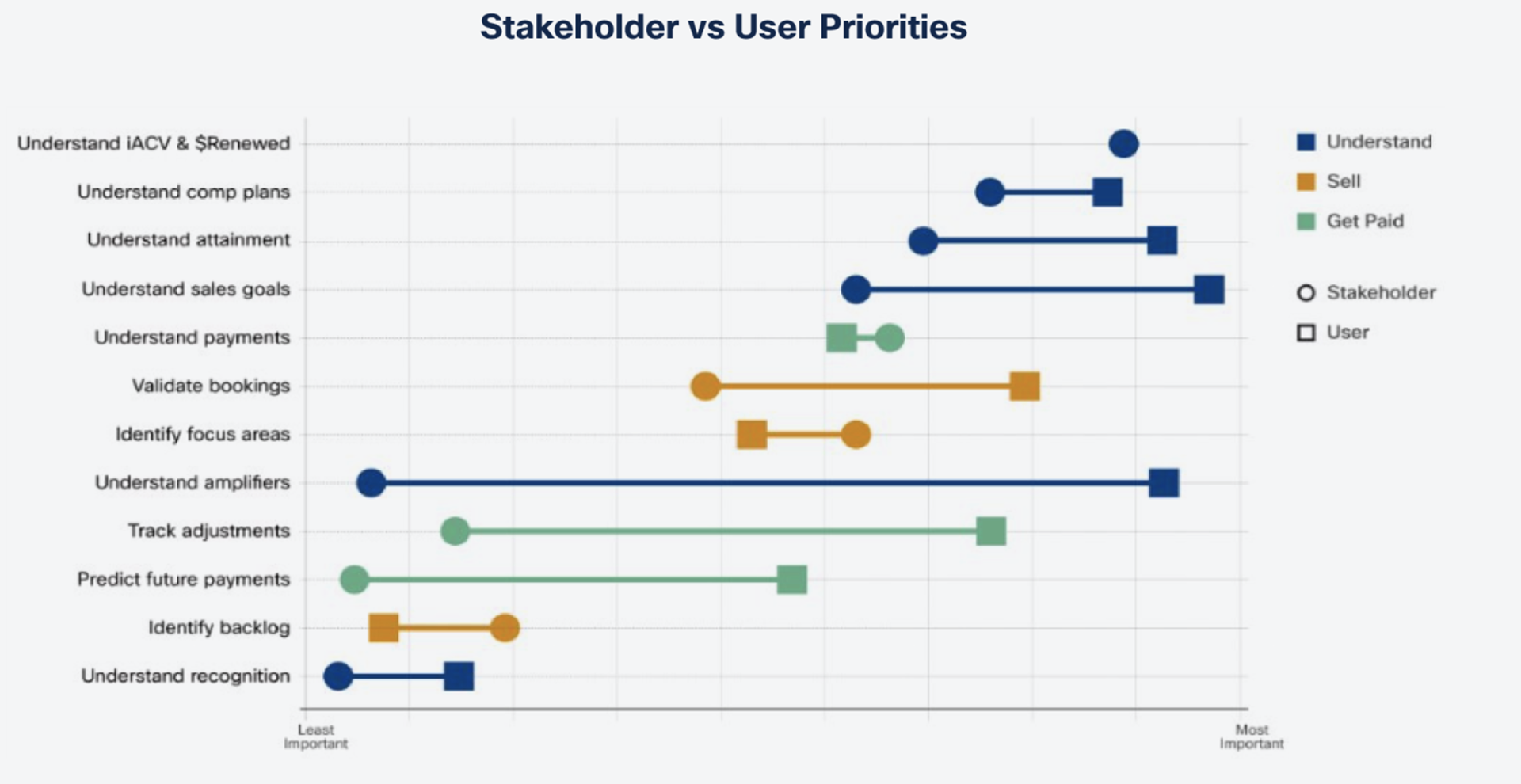
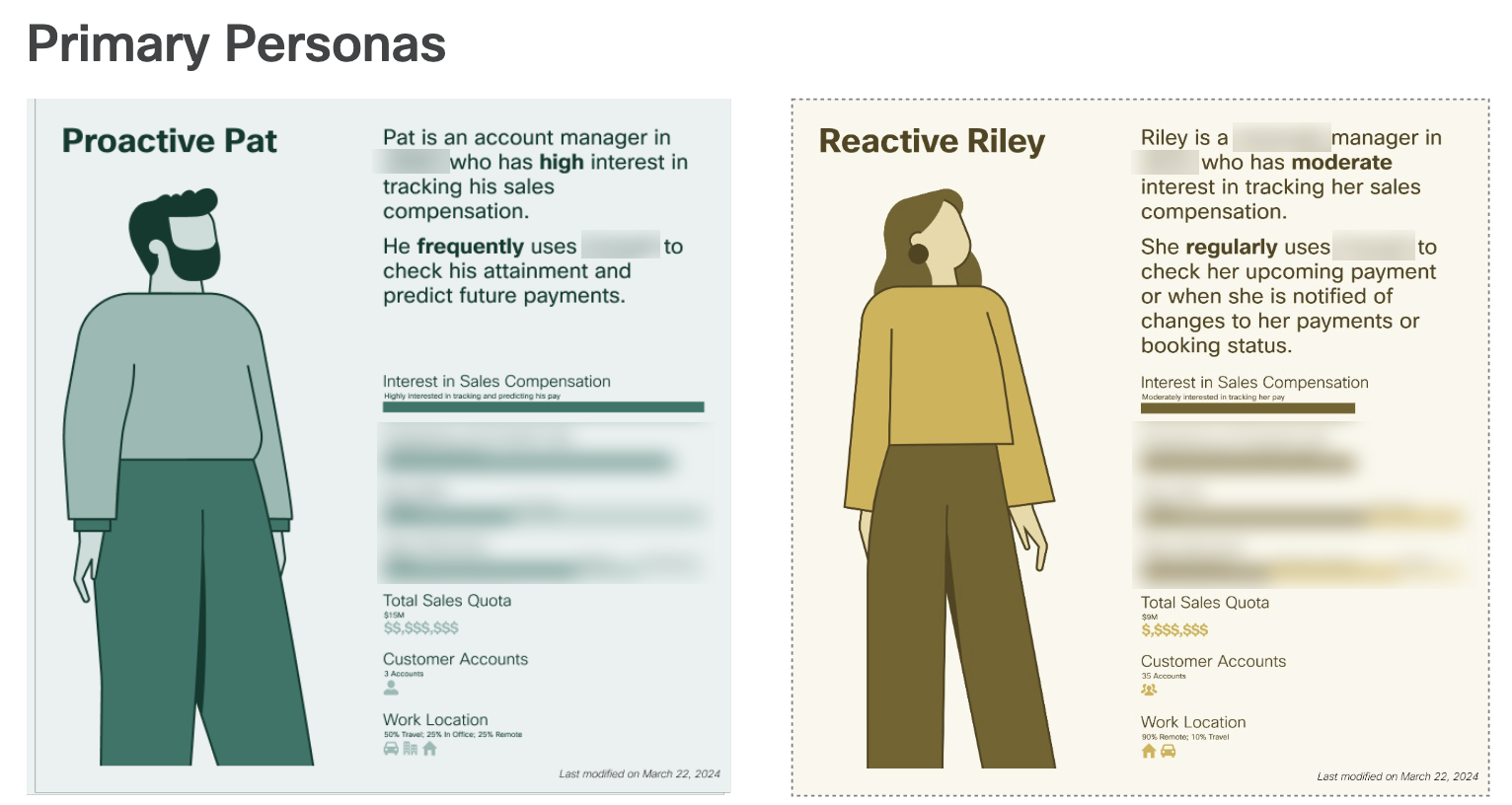
We were also able to segment users based upon behavior and not simply their job title. This allowed for us to frame possible solutions in a way that spoke directly to the extremes of a usage spectrum; thereby covering the needs of users that may exist between those two polarities.
Defining Future Scenarios:
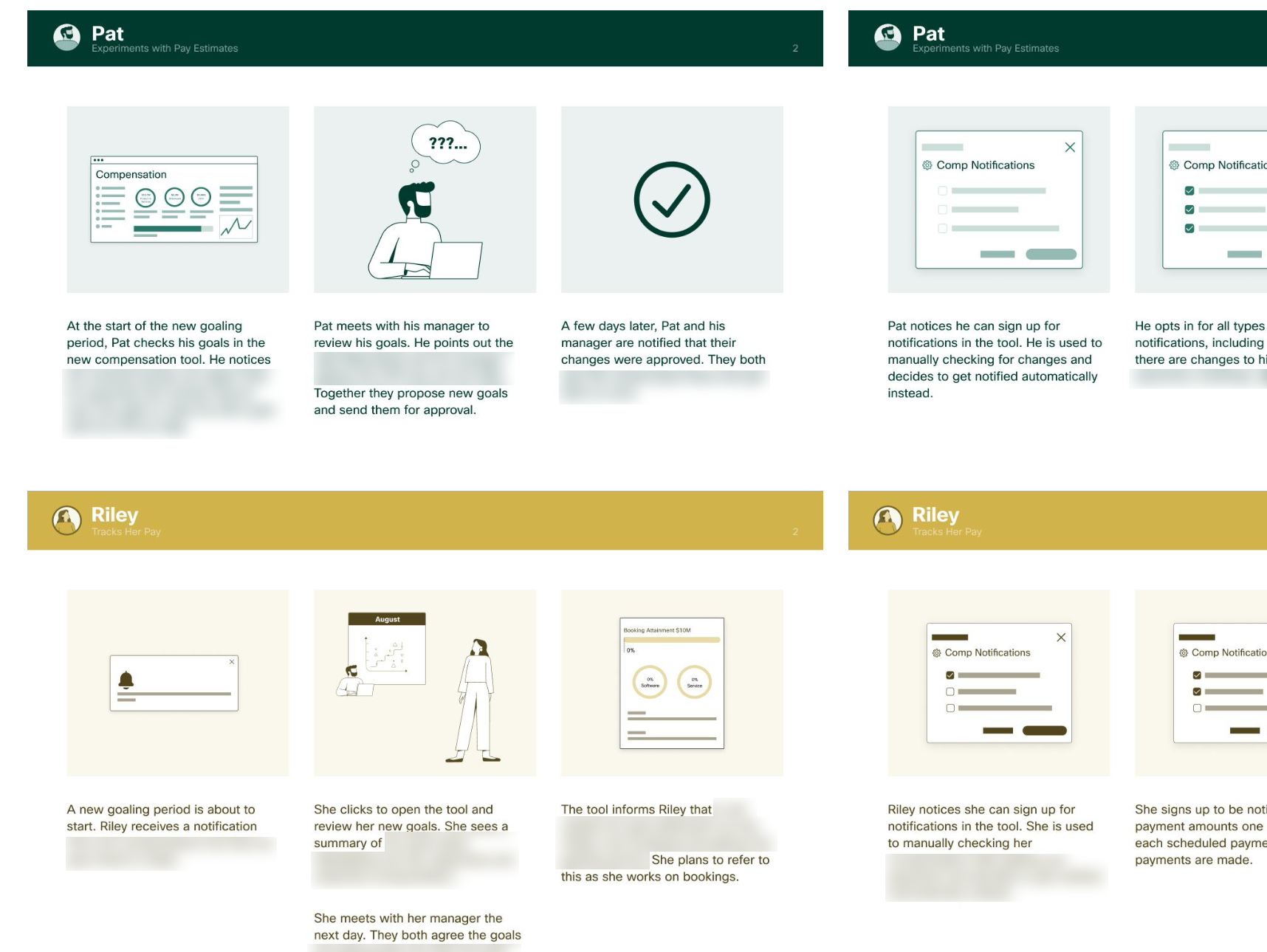
Once we understood the challenges sellers faced and the questions they wanted answered, we created future-facing scenarios. We defined narratives in which sellers could easily find answers to their key questions. These narratives helped us to explore how to support the jobs-to-be-done, while accommodating the behavioral variations we observed among sellers. We refined the scenarios with our stakeholders and created storyboards to evaluate future concepts with our sellers. Using feedback from users, we iterated on the solution, prioritizing the most important capabilities.
Refining Solutions Through User Feedback
Using revised scenarios as our guide, we hand-sketched potential solutions and quickly explored several options for ideal compensation experience. These sketches evolved into wireframes and a clickable mid-fidelity prototype. This prototype connected the dots between sellers’ orders and their compensation, made calculations transparent and easy to follow, highlighted valuable information, and consolidated tools to avoid surprises. We iterated on the designs with our stakeholders, leveraging their experience with Cisco’s incentive compensation policy. With the prototype in hand, we returned to our target users, to gather feedback on how the solution addressed their needs.
Using our user insights, we developed a high-fidelity prototype that integrated all our findings, making it easier for users to understand their compensation details while providing a comprehensive overview. To achieve this, we adhered to our design principles of "keep it simple," "highlight the most important information," and "avoid making users do the math." By leveraging our existing design system, we established consistent visual and interaction patterns that not only supported new users but also facilitated rapid development by IT engineers. This approach transformed the seller’s compensation experience from interpreting large datasets to engaging with an intuitive, digestible user interface. The interface allows sellers to answer pressing questions directly from the summary dashboard and delve into details when they need a deeper understanding of their compensation.
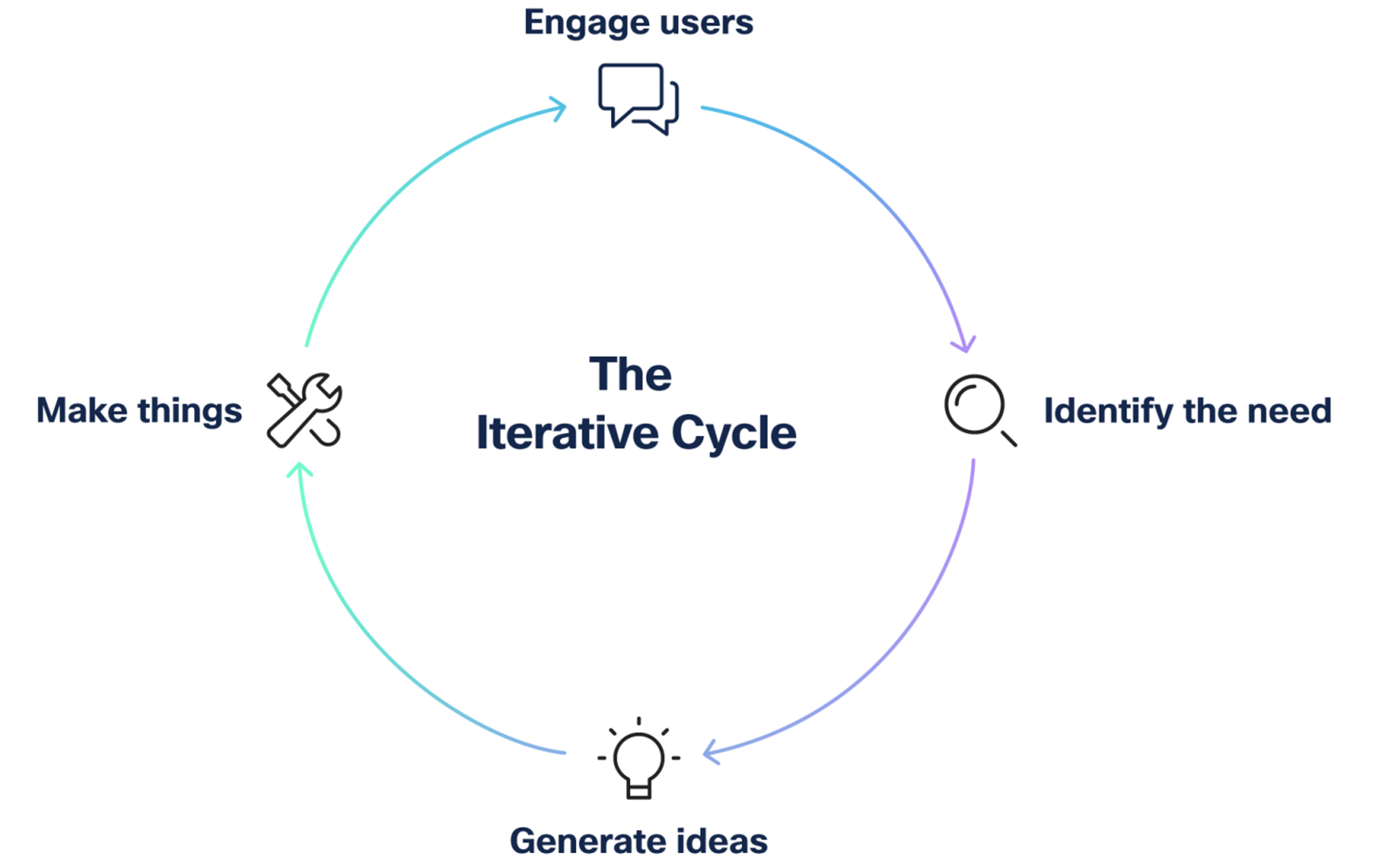
Our iterative process – learning from users, identifying their key needs, creating low-fidelity designs, and evaluating with users – built assurance in the evolving solution. We continually learned from users and adjusted our solution to best meet their needs. By starting from the big picture, we considered several possible solutions and solicited user feedback to determine the optimal path. As we refined the vision, this process ensured that sellers would fully embrace our final design.
Solution:
In our efforts to minimize information overload, we synthesized user feedback and adopted a fintech approach. We also sought to consolidate functionality relevant to the user workflow that currently sits in other applications such as Visibility and the Sales Comp Portal, which reduces the investigation and data reconciliation that currently gets in the way of users understanding the relationship between their sales goals, booked orders and incentive compensation. By simplifying the user interface, centralizing key information, providing transparent compensation calculations and organizing information around sellers’ orders, we enhanced the users’ experience and aligned their behavior with Cisco’s sales goals. The solution improves operational efficiency and fosters a more motivated and informed sales force.
“Thank you for all the work and the thought that went into it. Thanks for all the partnership. I deeply admire the work that you guys put into this and the output that you have delivered so far. And, we'll do our best to bring this to fruition.”
— Strategy and Planning Director
Impact:
For sellers, the vision design work undertaken by the LTD team established the framework for a new compensation experience, but also addressed intractable issues present in the current experience. For instance, our research revealed that most sellers prefer an order-centric approach, which allows them to understand how individual orders impact their overall sales goals and compensation.
By aligning the solution with the sellers’ mental model, in terms of orders and goals being met, we can achieve better behavioral adoption. This approach makes the compensation experience more intuitive, meaning a seller can see how an individual order impacts their sales goals overall.
For Stakeholders:
At the center of this effort, the team kept sellers’ workflow and pain points front-and-center as we attempted explaining to users how various streams of compensation work in a simple, easy-to-understand way. This helped our stakeholders approach the problem in new ways and frame possible future states from the point of view of our users.
For Engineering:
We were also able to work closely with the development team throughout the process, leading to fewer surprises later on. In addition, the use of established design library components and closer communication between development, engineering and design throughout the process have aided in minimizing churn due to scope creep and unclear functional requirements.